
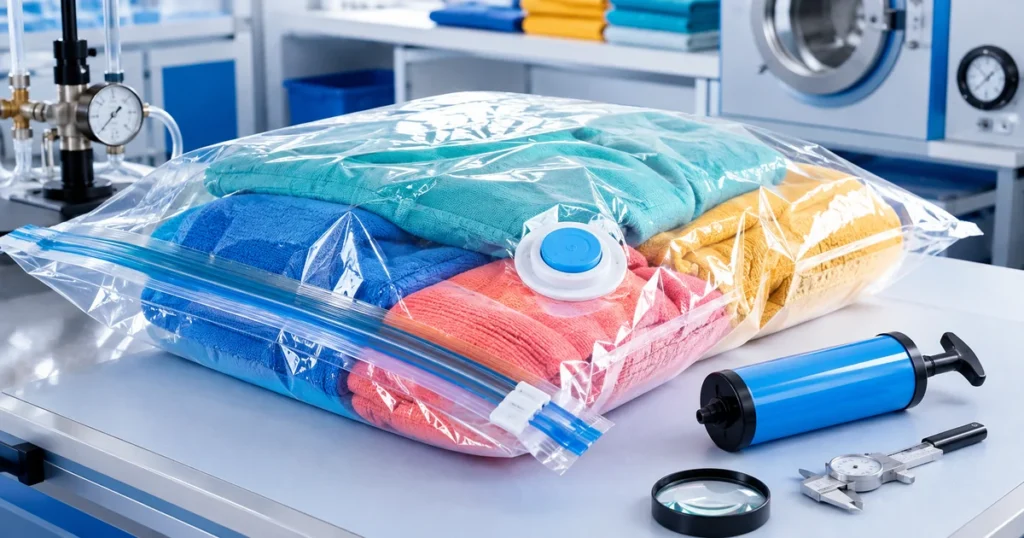
Choosing a vacuum storage bags supplier requires more than comparing a unit price. Importers, wholesalers, private-label brands and ecommerce sellers need a product that remains consistent across materials, sealing components, printing, packaging and repeat orders. A lower quotation can become expensive if bag dimensions vary, valves do not match the intended pump, packaging is unsuitable for the sales channel or production details are not documented clearly.
This guide explains how to evaluate a supplier before placing a bulk order. It focuses on the questions buyers should ask, the samples they should compare and the specifications that should be confirmed. For commercial product enquiries, buyers can also review ClearNest Pack as a vacuum storage bags supplier. The homepage serves the supplier-selection and quotation intent; this article remains an informational evaluation guide.
1. Check the Material Structure
Material structure affects flexibility, transparency, puncture resistance, sealing behaviour and the way a finished bag handles repeated folding. PA + PE is commonly used for vacuum storage bags: PA contributes barrier and strength characteristics, while PE supports heat sealing and flexibility. The material name alone, however, does not define finished performance.
Buyers should request the agreed film structure and thickness basis, then compare production samples with the approved reference. Check whether the film feels consistent across the surface, whether folds create excessive whitening or stress, and whether seals remain even around corners and component areas. Material substitutions should require approval rather than being accepted as an undocumented production adjustment.
For a deeper explanation of the material rather than supplier selection, see the PA PE vacuum storage bags material guide.
2. Evaluate Zipper and Sealing Quality
The zipper and perimeter seals are central to air retention. A sample may look acceptable when empty but still perform poorly after clothing is loaded and air is removed. Buyers should inspect zipper alignment, the feel of the closure, sealed edges, corners and the area where the valve joins the film.
ClearNest Pack product pages identify double-zipper configurations for applicable bags. For sourcing, confirm the exact zipper construction in the approved sample and specification instead of assuming that every model uses the same component. Compare samples from more than one production point when possible. Consistency between batches matters as much as one strong pre-production sample.
Ask the supplier how seal appearance and zipper operation are checked during production, what defects are recorded, and how nonconforming units are handled. The answer should connect to a practical inspection process rather than a general promise of quality.
3. Check the Valve Design
The valve must suit the bag construction and the intended method of removing air. Buyers may need compatibility with a hand pump, an electric pump or a suitable vacuum-cleaner connection, depending on the product program. The valve cap, internal sealing parts, opening size and attachment to the bag should be reviewed as one system.
Ask for confirmation of the selected valve and pump interface. Test how easily users can position the pump, whether the valve closes correctly after evacuation and whether operating instructions match the supplied components. If a retail set includes a pump, evaluate the bag, valve, pump and packaging together rather than approving each item independently.
The existing vacuum bag valve types guide covers valve selection in more detail.
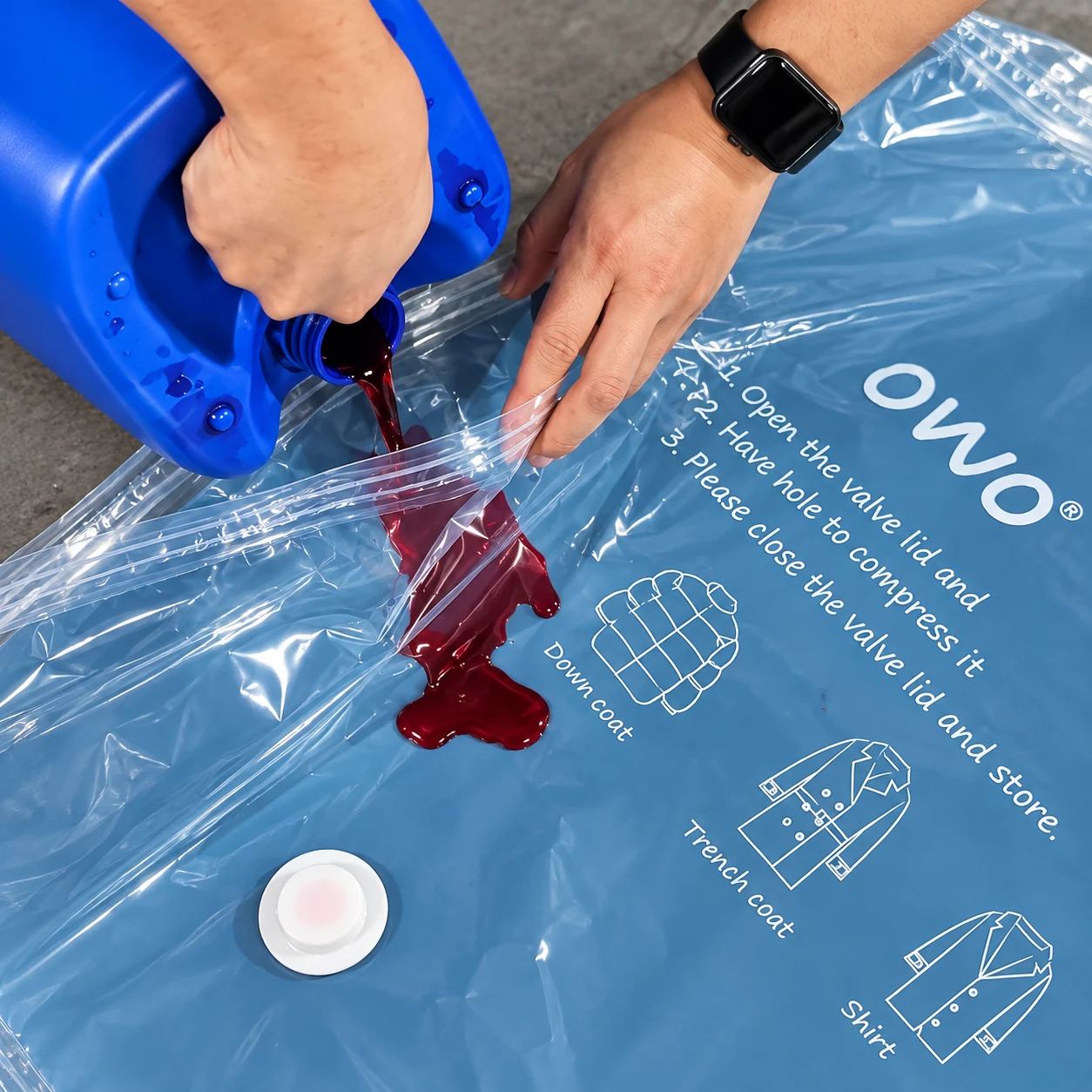
4. Ask How Air Leakage Is Tested
Air leakage can originate at the zipper, perimeter seal, valve connection or damaged film. For wholesale sourcing, quality control should therefore examine the finished system rather than treating individual components as isolated checks.
Buyers should ask how each batch is sampled, which sealing and visual checks are used, how the bag is loaded for evaluation, how long observations continue and what acceptance criteria apply. Do not assume that every individual bag receives the same test unless the supplier documents that process. A realistic inspection plan may combine in-process checks, batch sampling and additional testing agreed for the order.
Keep approved samples, specifications and inspection records aligned with the purchase order. If the construction changes, repeat relevant checks. The vacuum storage bag leak test guide explains practical leakage points and B2B evaluation steps without promising a universal test result.
5. Confirm Available Sizes and Customization
A supplier should be able to explain which sizes are standard, which dimensions can be customized and how finished dimensions are measured. Buyers should define the intended contents first, then confirm usable internal space, zipper position, valve position and tolerances. A generic garment count is less reliable than testing representative contents in the proposed bag.
Customization may include dimensions, material or thickness direction, logo, printed artwork, valve configuration, set composition and packaging. Each option affects artwork approval, sampling, production planning and quotation. Separate what is already standard from what needs a custom specification.
Review custom vacuum storage bags, private label vacuum storage bags and custom printed vacuum storage bags for the currently presented product and branding options.
6. Compare MOQ, Production Capacity and Lead Time
MOQ should be evaluated against the complete configuration, not as one universal number. Size count, printing, packaging, pumps and mixed-SKU requirements can change production economics. ClearNest Pack currently presents a standard MOQ of 10,000 pieces for custom printed vacuum storage bags, while other product pages state that MOQ is confirmed according to the selected specification and order mix.
Ask whether a proposed trial order uses standard or custom components and whether its packaging is representative of repeat production. For recurring programs, discuss how forecasts, artwork approvals and component purchasing affect scheduling. Production capacity should be considered together with the applicable product mix and confirmed order schedule rather than used as a stand-alone marketing number.
Lead time should be confirmed after sizes, materials, printing, components, packaging and sample approval are stable. Buyers should also allow for their own inspection, freight booking and destination requirements. Record the agreed production and delivery milestones in the commercial documents.
7. Review Packaging Options
Packaging influences shelf presentation, ecommerce handling, instructions and shipping efficiency. Current ClearNest Pack product information includes bulk packing, OPP-style bag packaging, retail boxes, inserts, custom packaging and single-size or mixed-size sets, depending on the product and project. Pump sets can also be coordinated where bag and valve compatibility is confirmed.
Before quotation, specify pack count, size mix, pump inclusion, folding method, instructions, barcode position, artwork, retail dimensions and shipping-carton requirements. Ask the supplier to check whether the compressed or folded product fits the proposed packaging without stressing seals or valves.

8. Verify Factory and Quality-Control Capability
A credible evaluation should connect commercial claims with observable processes. Review production photos, printing and lamination equipment, bag-making areas, component assembly, inspection steps, packing operations and warehouse handling. Real product and process images are more useful than generic factory graphics.
Ask which stages are performed in-house, which components may be coordinated externally and who controls the final specification. Confirm how artwork, dimensions, sealing, valves, printing and packaging are checked before shipment. ClearNest Pack’s factory gallery presents current production, printing, inspection and packing information for buyer review.
Review the manufacturing capability overview alongside project-specific evidence. Factory scale alone does not guarantee that a supplier is suitable for a specific program. The relevant question is whether the operation can repeatedly produce and document the approved construction, quantities and packaging within the agreed schedule.
9. Ask for Samples Before Bulk Ordering
Samples allow buyers to compare the written specification with a physical product. Evaluate film appearance and flexibility, finished dimensions, zipper operation, valve fit, seal quality, printing alignment, packaging and the complete user process. Use the intended pump or vacuum method and representative contents.
Clarify whether the sample is a stock reference, a digitally printed mock-up, a pre-production sample or a production sample. These stages answer different questions. A stock sample can demonstrate general construction, while an approved pre-production sample should reflect the order-specific dimensions, components, artwork and packaging more closely.
Document comments with photographs and measurable requirements. Once approved, identify the reference sample in the purchase and inspection records. Sample availability, cost and timing should be confirmed for the actual project rather than assumed from a generic policy.
10. Supplier Checklist for Wholesale Buyers
| Factor | What to Check |
|---|---|
| Material | Agreed structure, thickness basis, flexibility and batch consistency |
| Zipper | Construction, alignment, closure operation and approved reference |
| Valve | Seal, position and compatibility with the intended air-removal method |
| Leak Testing | Batch sampling, inspection method, criteria and records |
| Sizes | Finished dimensions, usable area, tolerances and size mix |
| Printing | Artwork, colours, print area, approval and alignment |
| Packaging | Pack count, instructions, barcode, retail pack and carton |
| MOQ | Quantity by size, print design, packaging and order mix |
| Lead Time | Timing after specification, components and artwork approval |
| OEM / Private Label | Available custom product and branding scope |
| Sample Availability | Sample type, purpose, timing and approval process |
Use the checklist to compare suppliers on the same basis. A clear request for quotation should state the target market, sizes, materials, valve and zipper direction, pump requirement, printing, packaging, quantities by SKU and destination.
Frequently Asked Questions
What should I look for in a vacuum storage bags supplier?
Check material consistency, zipper and valve construction, leakage-control procedures, customization scope, packaging, samples and the supplier’s ability to document repeat orders.
What material is commonly used for vacuum storage bags?
PA + PE is commonly used. Buyers should still confirm the agreed film structure, thickness basis and finished performance for the selected bag.
Can vacuum storage bags be customized with a logo?
Yes. ClearNest Pack presents custom logo, printed artwork and packaging options, subject to artwork and project confirmation.
What should wholesale buyers check before placing a bulk order?
Confirm dimensions, materials, zipper, valve, pump compatibility, printing, pack composition, packaging, quantity, inspection criteria and approved samples.
How can I check the sealing quality of vacuum storage bags?
Inspect zipper operation, perimeter seals, valve attachment and representative loaded samples. Agree on batch inspection and acceptance criteria before production.
Do vacuum storage bag suppliers offer private label packaging?
Private-label options can include printed bags, retail boxes, inserts and custom set configurations. The available scope should be confirmed for the selected product.
Should I request samples before placing a wholesale order?
Yes. Samples help buyers verify construction, dimensions, sealing, valve fit, printing and packaging before approving bulk production.
Prepare a Clear Supplier Enquiry
A useful supplier comparison begins with the same project brief for every candidate. Share the intended contents, required sizes, material direction, valve or pump method, artwork, packaging, quantities and destination. Then compare the complete specification, sample status, quality-control plan and commercial terms—not only the unit price.
When your requirements are ready, request a quote for project-specific review.