
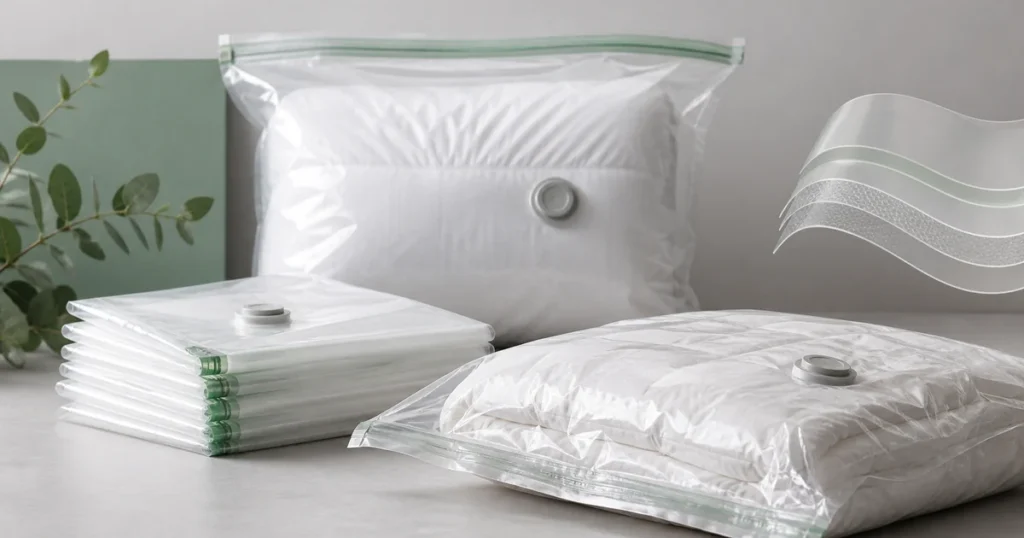
PA PE vacuum storage bags use a multilayer film concept in which polyamide (PA) and polyethylene (PE) contribute different functions to the finished package. For B2B buyers, the key question is not whether a supplier uses the letters “PA+PE,” but whether the proposed film structure, thickness, seals, valve, and converting quality are suitable for the intended product and distribution channel. The most reliable sourcing approach is to define the application, compare traceable samples, and approve a complete specification before ordering.
Quick Answer
PA PE vacuum storage bags combine polyamide and polyethylene in a multilayer film structure. PA can contribute toughness and barrier characteristics, while PE supports flexibility and heat sealing. The finished result still depends on layer arrangement, nominal thickness, zipper, valve, seals, and converting quality, so buyers should approve a complete specification and finished samples.
Importers, wholesalers, and private-label brands can review the available Transparent Vacuum Storage Bags as a starting point, but each custom program still needs its own confirmed construction. Material names alone do not establish durability, vacuum retention, or fitness for a particular use.
What PA and PE Do in a Vacuum Storage Bag

PA and PE are often combined because they bring different processing and functional characteristics to flexible packaging. In general terms, PA can support toughness and barrier performance, while PE can support flexibility and heat sealing. The actual result depends on the grade, layer arrangement, total construction, converting process, and finished-bag design.
Buyers should avoid treating every nylon polyethylene vacuum bag as interchangeable. Two suppliers may both describe a product as PA+PE while proposing different layer structures, thickness definitions, closures, valves, or seal geometries. A useful quotation therefore identifies the complete construction rather than presenting the material name as the whole specification.
PA as Part of the Film Structure
Polyamide is commonly discussed when buyers want a film that can tolerate handling and help limit gas transmission. However, a buyer should not convert this general role into a guaranteed performance claim. The amount, position, and grade of PA, together with the other layers and processing conditions, influence the finished material. Ask the manufacturing partner to state the proposed PA PE film structure and explain how it relates to the approved application.
PE as the Sealing Layer
Polyethylene is widely used for its flexibility and sealing behavior. In a vacuum storage bag, the PE side of the construction is relevant to perimeter seals, zipper integration, valve attachment, and the feel of the finished bag. Seal performance also depends on equipment settings and converting control, so a material declaration should be reviewed alongside finished samples rather than in isolation.
Specify the Application Before the Material
A practical material decision begins with the product brief. Define whether the bag will hold clothing, bedding, travel items, or another agreed category. Record the intended bag dimensions, likely fill condition, evacuation method, expected handling, retail channel, and packaging format. These details help suppliers propose a construction for review without forcing the buyer to guess a film recipe. For an application overview before choosing a material, compare common compression bag types.
Large storage formats can place stress around corners, seal lines, and valves. Travel formats may experience repeated folding and manual compression. Printed products must also support the chosen artwork and surface appearance. Because these use cases differ, one PA PE vacuum storage bag specification should not automatically be copied across every size and format.
Film Structure and Nominal Thickness
Film structure describes how the layers are arranged, while nominal thickness describes a target measurement for the overall film or another clearly defined basis. Both must be documented. A thickness value without a unit, measurement method, or definition of what is being measured can cause misleading quotation comparisons.
Ask suppliers to state whether the quoted figure refers to one film wall and where measurements are taken. Buyers should also define how variation will be assessed for their program. A thicker construction is not automatically better: material balance, seal quality, valve design, folds, and workmanship all affect the complete bag.
For a deeper framework on this variable, review the existing B2B guide to vacuum storage bag thickness. Use that information to prepare questions, then confirm the final measurement requirements in the purchase specification and approved sample.
Sealing Structure, Zipper, and Valve Decisions
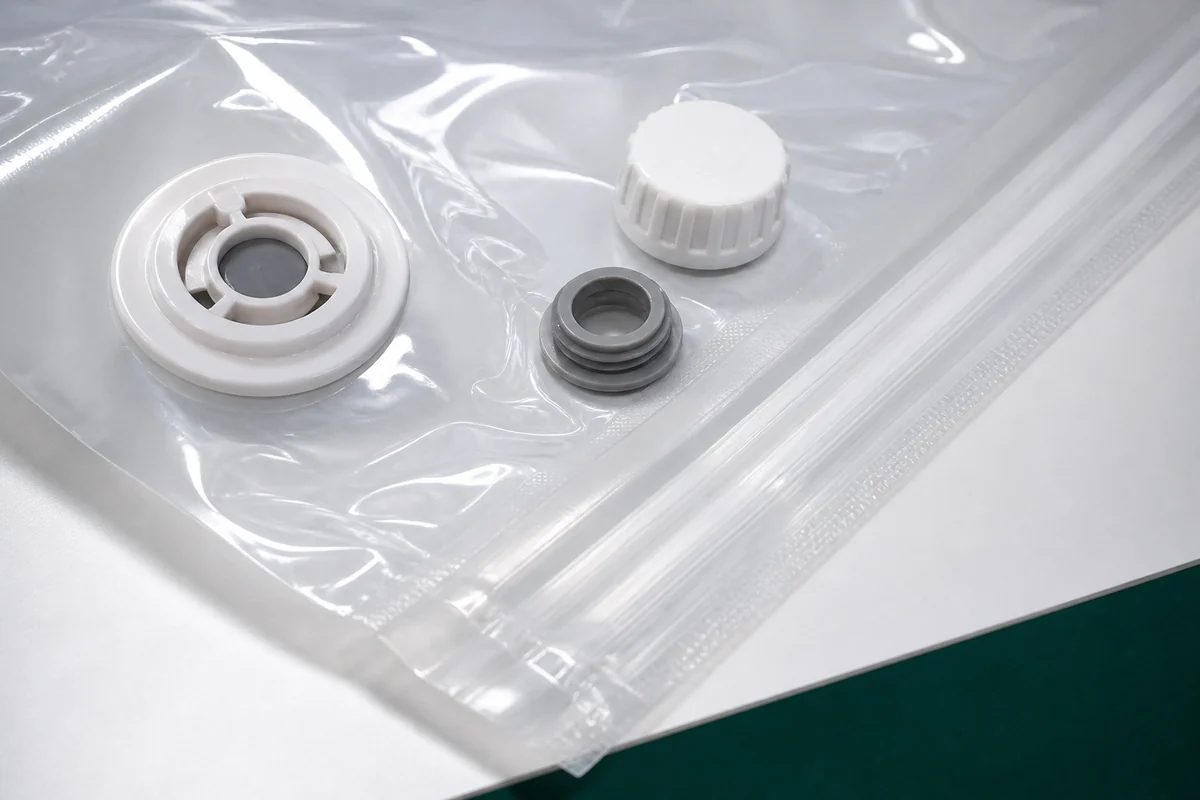
Air can enter through several parts of a finished bag, so leakage should not automatically be blamed on the film. Buyers need to consider the perimeter seal, zipper or closure, valve assembly, material around the valve, and user operation. Each component should be identified in the specification and evaluated as part of the complete product.
Closure and Perimeter Seals
The closure should be easy to align and operate for the target user while maintaining the intended seal. Review zipper attachment, end areas, and the consistency of perimeter seals. Check whether folds or printed areas interfere with closure operation. During sample review, record where any loss of vacuum appears instead of requesting a material change without evidence.
Valve Type and Compatibility
Valve options can differ in geometry, cap design, internal components, and evacuation method. Buyers should define the equipment or manual process expected in the target market and verify compatibility through samples. Avoid using “universal” unless the claim has been validated against the intended range of equipment and operating conditions.
Custom Sizes, Printing, and Retail Packaging
Custom dimensions should be specified with a clear measurement method. Confirm whether listed dimensions refer to external size, usable space, or another defined basis. Also review how zipper, valve, seals, and artwork positions affect the usable area. An approved drawing can reduce ambiguity when several sizes share one visual system.
For custom printed vacuum storage bags, discuss artwork format, print area, color references, registration expectations, surface treatment if relevant, and the approval process. Printing suitability depends on the selected film and process. Approve a representative printed sample or another agreed color reference before bulk production.
Retail packaging should protect the folded bag and communicate correct use. Private-label buyers may need inserts, labels, cartons, or other pack formats, but each element should be confirmed for the project. Review pack dimensions, barcode placement, language, warning content, artwork revisions, and master-carton organization as part of the same approval process.
MOQ and Commercial Questions
MOQ is a project-specific commercial term, not a fixed property of PA PE vacuum storage bags. It may be influenced by film preparation, printing setup, component selection, size range, packaging, and how several variants are combined. Buyers should provide a realistic order scenario and ask the supplier to explain which customization choices affect the proposed minimum.
Do not assume that a quantity discussed for a transparent standard item will apply to a custom printed assortment. Request written confirmation of MOQ, pricing basis, sampling charges if any, packaging assumptions, and the validity period of the quotation. Lead time should also be confirmed for the approved configuration rather than copied from a general product page.
Quality Control for PA PE Vacuum Storage Bags
Quality control should connect the purchase order, approved specification, approved sample, and inspection checklist. The objective is to verify the agreed product, not to apply generic pass or fail statements that were never defined with the supplier.
| Inspection area | What buyers should confirm | Useful evidence |
|---|---|---|
| Material and film | Declared structure, nominal thickness basis, appearance, and consistency | Approved specification, supplier declaration, and measurement records |
| Dimensions | Measurement method, bag size, usable area, and component positions | Approved drawing and sample comparison |
| Closure and seals | Zipper operation, perimeter-seal appearance, and agreed functional checks | Inspection checklist and recorded observations |
| Valve | Correct type, assembly, cap, and intended evacuation compatibility | Component reference and functional sample |
| Printing | Artwork version, placement, registration, and agreed color reference | Signed artwork and approved printed sample |
| Packaging | Pack contents, folding, labels, barcode, and carton arrangement | Packaging specification and packing photos |
Sample and Pre-Shipment Checks
Use representative contents when assessing finished bags. Operate the closure and valve as the target buyer would, inspect seal areas, and observe the sample according to buyer-defined conditions. If a problem occurs, document its location and circumstances. This helps distinguish film damage from closure, valve, seal, packing, or handling issues.
Before shipment, confirm that inspectors have the current specification and artwork. Define defect categories and acceptance criteria for the project rather than relying on vague descriptions such as “good quality.” Keep inspection results with order documents so repeat orders can be compared against the same reference.
B2B Sourcing Checklist
- Define the use case: contents, sizes, handling, evacuation method, channel, and target customer.
- Request the proposed construction: PA/PE structure, nominal thickness basis, and any items still requiring confirmation.
- Specify components: zipper, seal layout, valve type, accessories, and operating instructions.
- Control custom artwork: print files, colors, placement, packaging, labels, and revision numbers.
- Approve traceable samples: identify which quotation and specification each sample represents.
- Confirm commercial terms: project-specific MOQ, pricing basis, packaging assumptions, and lead time.
- Prepare quality criteria: dimensions, appearance, function, defect definitions, and inspection evidence.
- Manage changes: require review before changing material, components, dimensions, printing, or packaging.
Frequently Asked Questions
Are PA PE vacuum storage bags better than PE-only bags?
“Better” depends on the application and approved performance requirements. PA can contribute useful characteristics in a multilayer structure, but the finished result also depends on layer balance, thickness, seals, valve design, and converting quality. Compare traceable finished samples rather than material names alone.
What PA-to-PE ratio should a buyer specify?
There is no single ratio appropriate for every bag. Buyers should describe the use case and request a proposed structure from qualified production teams. Any composition requirement should be documented and confirmed for the specific project rather than copied from an unrelated product.
How should buyers compare PA PE film quotations?
Use a common quotation sheet covering structure, thickness definition, dimensions, zipper, valve, printing, packaging, samples, MOQ, and quality requirements. Clarify missing fields before comparing prices.
Can PA PE vacuum bags be custom printed?
Custom printing can be discussed for suitable film constructions. Buyers should confirm the printing process, artwork requirements, print area, color reference, surface expectations, and sample approval method with the supplier.
What should be checked before approving an OEM order?
Confirm the final specification, drawing, sample, artwork, packaging, commercial terms, and inspection checklist all describe the same product. Unresolved items should remain clearly marked for confirmation rather than being treated as approved.
Prepare a Clear Material Brief
ClearNest Pack supports importers, wholesalers, distributors, and private-label brands with vacuum storage bag sourcing, customization, and export coordination through appropriate production teams. A clear brief allows material, component, printing, and packaging options to be evaluated against the same business requirement.
Looking for custom vacuum storage bags for your market? Contact ClearNest Pack to discuss sizes, materials, printing, packaging and order requirements.